
Bulkhead vs Seawall: What’s the Difference?
If you own waterfront commercial or residential property in Florida, you’ve likely encountered the terms “bulkhead” and “seawall” in engineering reports, permit applications, or contractor bids. Both provide shoreline stabilization. But they’re designed for completely different water conditions and load demands.
Bulkhead vs Seawall
Seawalls are engineered to withstand strong wave energy and storm surges. Bulkheads, on the other hand, primarily retain soil and create vertical waterfront edges. Seawalls are usually heavier and more reinforced, while bulkheads are common in marinas and low-energy waterways. The cost, materials, and engineering requirements can differ significantly between the two.
What Is a Seawall?
A seawall is your heavy-duty coastal erosion protection system. It’s a reinforced structure engineered to stabilize coastlines and minimize storm damage. These robust structures are built to withstand strong wave energy and storm surges, which makes them suitable for high-energy shorelines and waterfront properties exposed to frequent wave action.
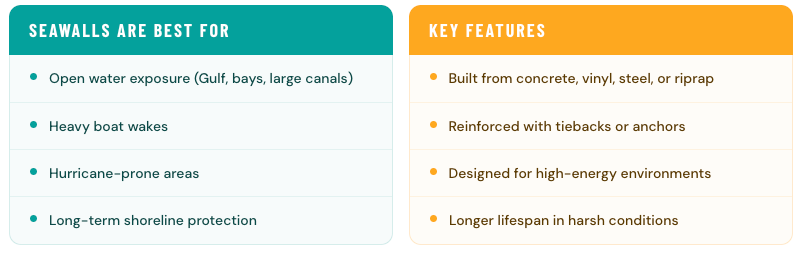
In Florida, we’re talking about structures that face hurricanes, constant tidal fluctuations, and serious hydrostatic pressure. If your property faces open water, like the Gulf, a bay, or even a wide canal with heavy boat traffic, you need something that can handle waves crashing against it day after day.
The seawall construction materials chosen make all the difference in longevity. Properly selected materials can mean the difference between 20 years of service and 50-plus years of reliable protection.
What Is a Bulkhead?
Bulkheads are structural retaining walls used in marine environments, plain and simple. They keep your yard from sliding into the water and create that clean, vertical edge you see in most canal-front properties.
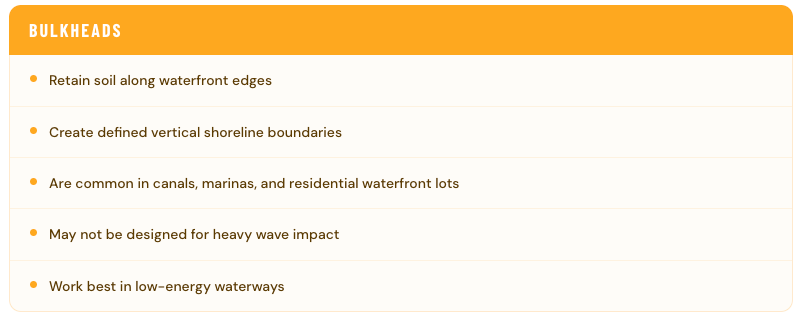
The performance of a bulkhead depends heavily on soil type, embedment depth, and whether you’re dealing with fresh or saltwater exposure. Sandy soil behaves differently from clay, and saltwater is way more corrosive than freshwater. These factors matter more than most property owners realize when evaluating their shoreline stabilization needs. Soil composition alone can impact structural lifespan by 10-15 years.
The Difference Between a Bulkhead and a Seawall
Let’s examine the key differences side by side:
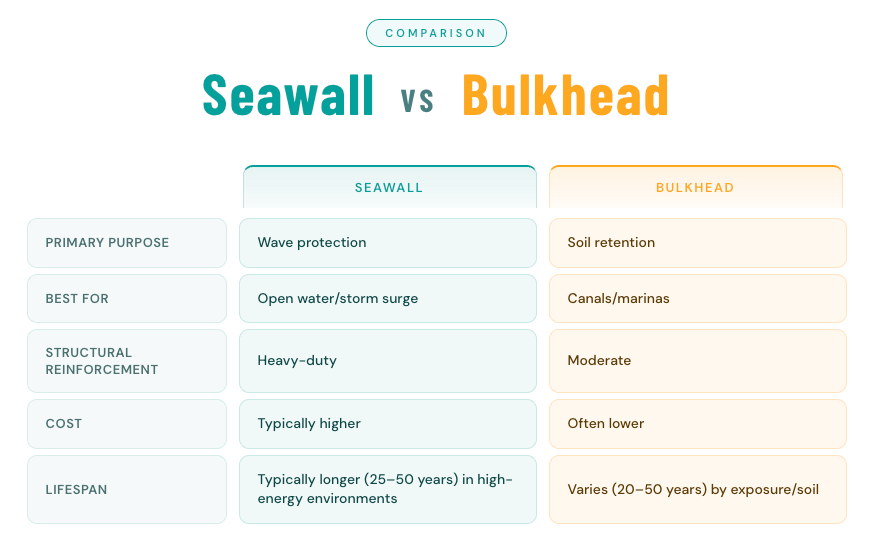
Here’s what happens when you get it wrong: install a bulkhead where you need a seawall, and you’ll watch it fail within years instead of decades. Many property owners try to save money by installing a bulkhead on open water. Two years later, they’re calling for emergency repairs after a storm.
If you’re still not sure which structure fits your property, that’s exactly what a waterfront structural evaluation is for. Request a free consultation here.
When Should You Choose a Seawall?
Choose a seawall if your property faces:
- Open bay or Gulf exposure
- Heavy boat wakes
- Hurricane surge risk
- Long-term structural protection needs
Look, seawalls cost more upfront. There’s no sugar-coating that. But when you need one, you really need one. The seawall vs bulkhead decision becomes pretty clear when you’re watching three-foot waves slam into your property during a nor’easter. While the initial investment is higher, seawalls often prove more cost-effective over time due to their longevity and reduced repair needs in harsh conditions.
Properties on Sarasota Bay, Charlotte Harbor, or any Gulf-facing location? Seawall, no question. Even some wider canals with heavy boat traffic warrant the extra protection. The investment pays off when your neighbor’s bulkhead is getting rebuilt while yours stands strong.
When Is a Bulkhead Appropriate?
Choose a bulkhead if you’re located on:
- A protected canal
- Areas with minimal wave energy
- Properties with primarily soil retention needs
- Projects with budget constraints
Bulkheads work great in the right conditions. Most residential canals in Cape Coral, parts of Fort Myers, and protected waterways throughout Florida do fine with properly engineered bulkheads. That being said, you need an engineering evaluation. What looks like calm water to you might have hidden factors like boat traffic patterns, storm surge potential, or soil conditions that demand something stronger. An honest assessment beats wishful thinking every time.
Florida Engineering Considerations
This is where things get technical, but stay with us. Florida’s unique conditions (sandy or clay soils, high water tables, saltwater corrosion) pose specific challenges for marine retaining walls. Sandy soil drains well but offers less lateral support; clay traps water, amplifying pressure; and our swamp-like water tables compound hydrostatic risks.
These factors drive precise load-bearing designs, which vary by use. Residential seawall installation (think backyard pools) handles lighter loads, while commercial seawall installation, such as marina docks, requires heavier pilings and DEP-compliant engineering to withstand corrosion and surges.
Effective drainage is non-negotiable as well. Weep holes and systems relieve hydrostatic pressure that could topple any wall. Professional evaluations tie it all together by assessing exposure, soils, usage, and regulations to recommend seawalls or bulkheads without over- or under-engineering your investment.
Repair Considerations
Eventually, every waterfront structure needs attention. Bulkhead issues often involve rot or corrosion, especially in older wood or steel structures. Sometimes you can reinforce what’s there. Other times, it’s replacement or nothing. The key is catching problems early.
Seawall problems tend toward cracking or void formation behind the wall. Concrete cracks, steel corrodes, and soil washes out through gaps. Modern repair techniques can extend a structure’s life, but only if the underlying structure is sound.